
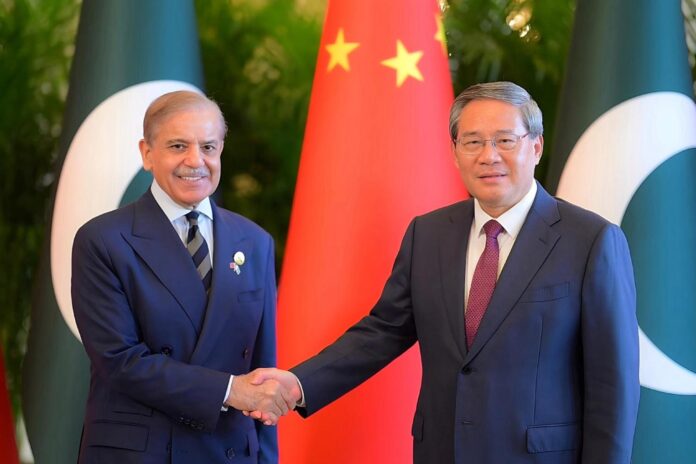
On September 4, 2025, Pakistan and China signed 21 Memoranda of Understanding (MoUs) worth $4.2 billion to boost cooperation and investment across diverse sectors. The agreements, finalized at the Pakistan-China Business-to-Business (B2B) Investment Conference in Beijing, mark a significant step in deepening economic ties.
The Beijing conference brought together key figures, including Pakistan’s Deputy Prime Minister and Foreign Minister Ishaq Dar, federal ministers, and representatives from prominent Pakistani and Chinese companies. The 21 MoUs cover high-tech, agriculture, healthcare, chemicals, petrochemicals, iron, steel, copper, solar energy, and electric vehicles. Notably, $1.54 billion of the agreements involve joint ventures, fostering collaboration between businesses from both nations.
Prime Minister Shehbaz Sharif, addressing the conference, hailed the event as a “proud moment” and a testament to the enduring Pakistan-China friendship, which he described as “higher than the Himalayas and sweeter than honey.” He emphasized that the agreements signal the launch of CPEC 2.0, a new phase of the China-Pakistan Economic Corridor focused on B2B investments. Additionally, Sharif highlighted China’s past support, including $35 billion invested through CPEC since 2015, which ended Pakistan’s energy crisis and revitalized industries and agriculture.
The MoUs target critical sectors to drive Pakistan’s economic growth. For instance, investments in agriculture aim to modernize farming, a backbone of Pakistan’s economy that supports 60% of its population. Similarly, solar energy and electric vehicle projects align with global sustainability trends, while high-tech and healthcare initiatives promise innovation and improved services. The chemical, petrochemical, iron, steel, and copper sectors will strengthen industrial capacity, creating jobs and boosting exports.
Sharif invited Chinese investors to leverage Pakistan’s cost-effective labor and Special Economic Zones, assuring them of full support and security. He also noted that these agreements build on CPEC’s success, which delivered infrastructure like roads, dams, and the Lahore Orange Line, transforming Pakistan’s economic landscape.
Leave a Reply