
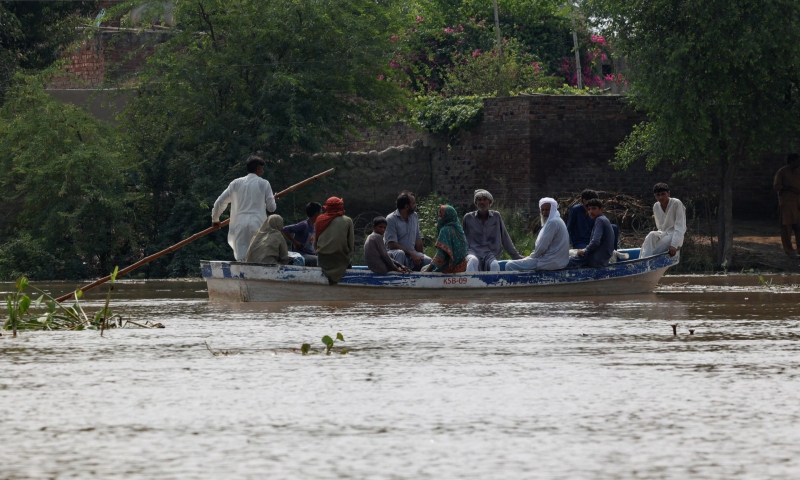
Relentless monsoon rains and water releases from India have triggered high flood warnings for the Ravi and Chenab rivers in Punjab, Pakistan, as of August 26, 2025. The Provincial Disaster Management Authority (PDMA) and National Disaster Management Authority (NDMA) report that water levels are rising rapidly, threatening low-lying areas in districts like Sialkot, Gujrat, and Narowal. The crisis has disrupted lives, submerged villages, and prompted urgent evacuation efforts.
Rising River Levels
The Ravi River at Jassar is expected to see high flood levels within 48 hours, with flows projected between 80,000 and 125,000 cusecs, driven by releases from India’s Madhopur Barrage and Thein Dam, which is at 86% capacity. The Chenab River at Marala is also critical, with water discharge reaching 454,064 cusecs by 9:30 PM on August 25, signaling a very high flood risk. Tributaries like Bein, Basantar, and Deg are swelling, raising fears of flash floods in surrounding areas. Heavy rainfall across northern India and Pakistan’s Punjab region, combined with India’s water releases, has exacerbated the situation.
Emergency Response and Public Safety Measures
The Pakistan Meteorological Department (PMD) forecasts moderate to heavy rainfall in northeastern Punjab until August 27, 2025, worsening urban flooding in cities like Sialkot and Gujranwala. Over 24,000 people have been evacuated from flood-prone zones, with Rescue 1122 deploying boats and emergency equipment in Sialkot and other affected areas.
Prime Minister Shehbaz Sharif has ordered daily monsoon review meetings, directing authorities to expedite rescue operations and provide food, tents, and medical supplies. Punjab Chief Minister Maryam Nawaz has mandated timely evacuations and livestock relocation to safer grounds. The NDMA’s National Emergency Operations Centre is monitoring the situation 24/7, coordinating with local authorities to ensure preparedness.
The floods come amid diplomatic tensions over the Indus Waters Treaty, with Pakistan accusing India of violating the 1960 agreement by releasing water without adequate warning. India’s notifications on August 24 and 25 cited humanitarian grounds, but Pakistan insists on treaty compliance. The ongoing monsoon, which has claimed 799 lives nationwide since June 26, highlight the region’s vulnerability to climate-driven disasters.
Residents are urged to avoid riverbanks, follow official alerts via the Pak NDMA Disaster Alert app, and prepare emergency kits. As Punjab braces for more rain, the focus remains on saving lives and mitigating damage in this escalating crisis.
Leave a Reply