
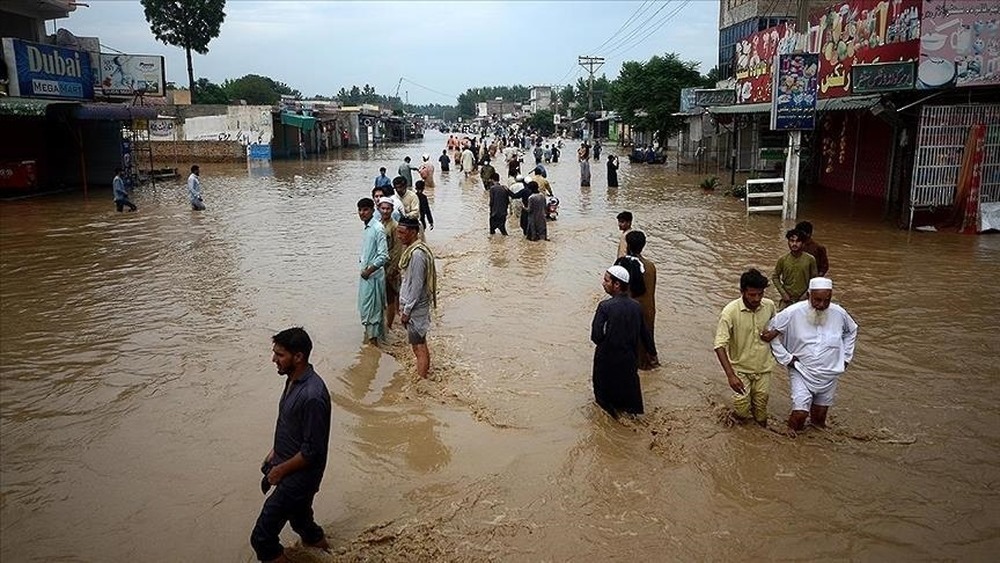
Punjab, Pakistan, is grappling with one of the most severe flood crises in decades, as relentless monsoon rains and overflowing rivers have unleashed widespread destruction across the province. According to Director General of the Punjab Provincial Disaster Management Authority (PDMA), Irfan Ali Kathia, the floods have claimed 46 lives, affected approximately 3.5 million people, and submerged nearly 4,000 villages. As rescue operations intensify and authorities race against time, the convergence of the Ravi and Chenab rivers poses a “double threat” to districts like Multan and Muzaffargarh, while controlled breaches are being implemented to protect urban centers.
Devastating Impact Across Punjab
The floods, triggered by heavy rainfall in Punjab and upstream regions like Himachal Pradesh and Jammu & Kashmir, have wreaked havoc on communities, infrastructure, and agriculture. Irfan Ali Kathia reported that nearly 1.5 million people have been evacuated to safer areas, with rescue efforts involving the Pakistan Army, National Disaster Response Force (NDRF), and other agencies. The PDMA has set up hundreds of relief and medical camps to provide shelter, food, and healthcare to displaced residents. However, the scale of the disaster has overwhelmed local resources, with entire neighborhoods washed away and farmlands submerged.
In Multan, the floodwaters from the Ravi River have reached the railway bridge, while dozens of villages in Kabirwala and Shujabad have been inundated. In Lodhran, five villages have seen protective embankments collapse, severing road connections and flooding crops. Farmers lament the loss of their livelihoods, with vast tracts of rice, sugarcane, and cotton fields destroyed just weeks before harvest. The PDMA estimates that over 375,000 acres of farmland have been submerged, threatening Pakistan’s agricultural economy.
Critical River Levels and “Double Threat”
The convergence of the Ravi and Chenab rivers near Khanewal has created a perilous situation for Multan and Muzaffargarh. Water levels at Head Muhammadwala and Sher Shah have reached 412 feet, just 5 feet below the danger mark, prompting authorities to declare the next 12 hours critical. The Flood Forecasting Division reports high flood levels at Baloki, with an inflow and outflow of 114,130 cusecs, and exceptionally high levels at Sidhnai, with an inflow of 160,580 cusecs and an outflow of 157,580 cusecs. Meanwhile, Jassar on the Ravi River is experiencing a medium flood with 85,980 cusecs.
Irfan Ali Kathia warned that floodwaters from the Chenab River at Qadirabad will re-enter affected areas, exacerbating the crisis in Jhang. Additionally, a flow of 900,000 cusecs is expected to enter Sindh between September 6 and 7, posing further risks downstream. To mitigate the pressure on barrages and protect densely populated cities, the Punjab government is implementing controlled breaches along eastern rivers. These measures aim to divert floodwaters away from urban centers, but rural areas like Shujabad and Kabirwala are bearing the brunt, with dozens of villages submerged.
The Punjab government, led by Chief Minister Maryam Nawaz, has mobilized a massive rescue and relief operation, described as the largest in the province’s history. Senior Provincial Minister Marriyum Aurangzeb reported that over 481,000 people have been relocated, with 511 relief camps and 351 medical camps operating round-the-clock. Additionally, 405,000 livestock have been rescued, and 808 boats are deployed for evacuations. Chief Minister Nawaz has personally visited relief camps in Kasur and Sheikhupura, offering support to displaced families and praising the efforts of rescue teams.
Leave a Reply