
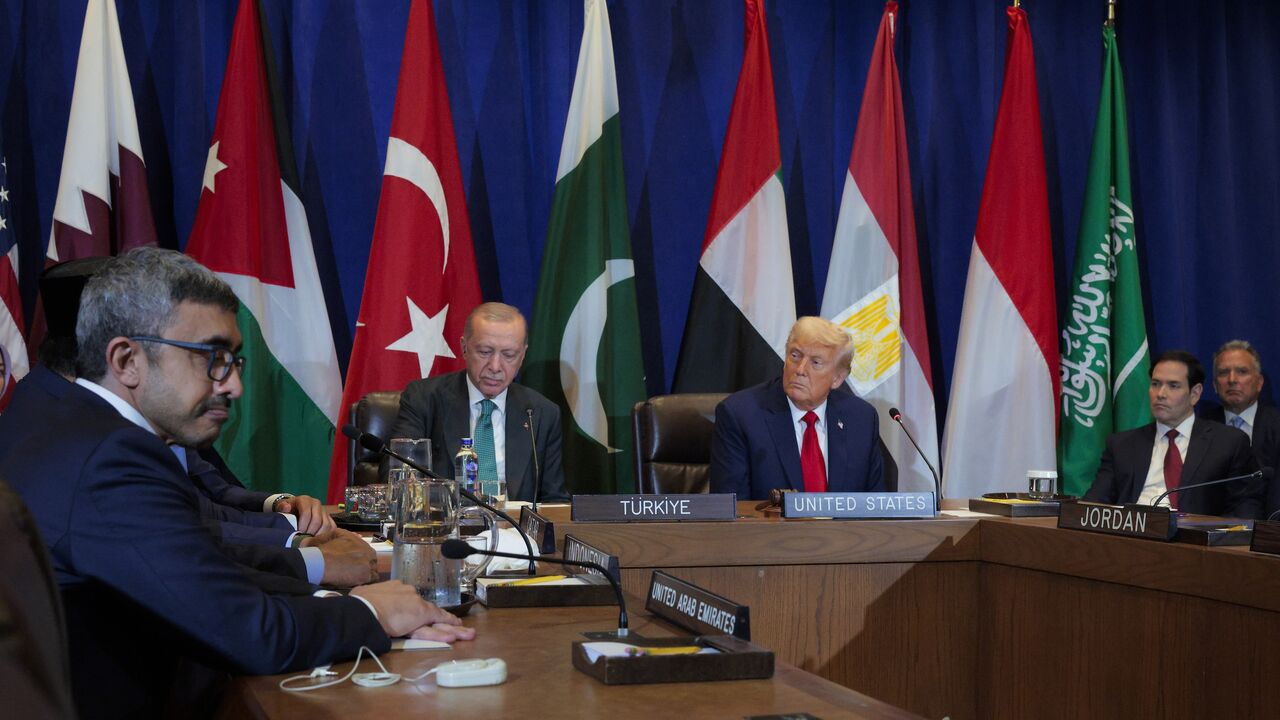
President Donald Trump has unveiled a comprehensive 21-point peace plan for Gaza, and this initiative promises to end the ongoing war while charting a realistic pathway to Palestinian statehood.
First, officials presented the proposal during high-level meetings with Arab and Muslim leaders on the sidelines of the United Nations General Assembly in New York. Moreover, the plan addresses immediate humanitarian crises, security concerns, and long-term political aspirations, marking a significant evolution in US Middle East policy.
Immediate Ceasefire and Hostage Release
Specifically, the plan starts with an immediate ceasefire and the unconditional release of all Israeli hostages held by Hamas. In exchange, Israel commits to freeing hundreds of Palestinian security prisoners, over 1,000 Gazans detained since the conflict began, and the remains of deceased Palestinians. Additionally, Hamas members who pledge peaceful coexistence receive amnesty, while those opting to leave Gaza gain safe passage to host countries. Therefore, these measures aim to de-escalate tensions quickly and build trust between parties.
Demilitarization and Governance Reform
Next, the proposal focuses on Gaza’s demilitarization and deradicalization, ensuring Hamas has no future role in governance. Instead, an international security force, including Arab and Muslim troops alongside Palestinians, will stabilize the region temporarily. Meanwhile, a Palestinian committee under the Palestinian Authority (PA) manages daily operations. Over time, the PA assumes full control after implementing critical reforms. Thus, this approach prevents power vacuums and promotes accountable leadership.
Reconstruction and Humanitarian Aid
Beyond security, the plan emphasizes Gaza’s reconstruction through a “Trump development plan,” funded by Arab nations and international partners. For example, humanitarian aid will match levels from the January 2025 hostage deal—up to 600 trucks daily—while efforts target rubble removal and infrastructure repair. As a result, Gazans receive incentives to remain in the Strip, reversing earlier displacement proposals and prioritizing community rebuilding.
Palestinian Statehood
Most importantly, the initiative outlines a credible horizon for Palestinian statehood. Once Gaza’s redevelopment progresses and PA reforms succeed, discussions will explore a two-state solution honoring Palestinian aspirations. In fact, the US commits to facilitating direct Israel-Palestinian dialogues for peaceful coexistence, countering recent recognitions of Palestinian statehood by nations like France and the UK. However, Israeli Prime Minister Benjamin Netanyahu faces domestic resistance from hardliners opposing PA involvement or statehood talks.
Overall, this 21-point framework tests commitments from Israel, Hamas, and the PA. Although Trump remains optimistic about a breakthrough, success depends on cooperation from all parties.
Leave a Reply