
Pakistan’s decision to extend its airspace restrictions for Indian airlines continues to take a heavy toll on India’s aviation industry, with carriers facing mounting operational costs, longer flight times, and growing financial pressure.
The prolonged ban has forced Indian airlines to avoid Pakistani airspace on key international routes, particularly flights bound for Europe, North America, and the Middle East. The detours have significantly increased fuel consumption, crew expenses, and aircraft operating costs while also extending journey times for passengers.
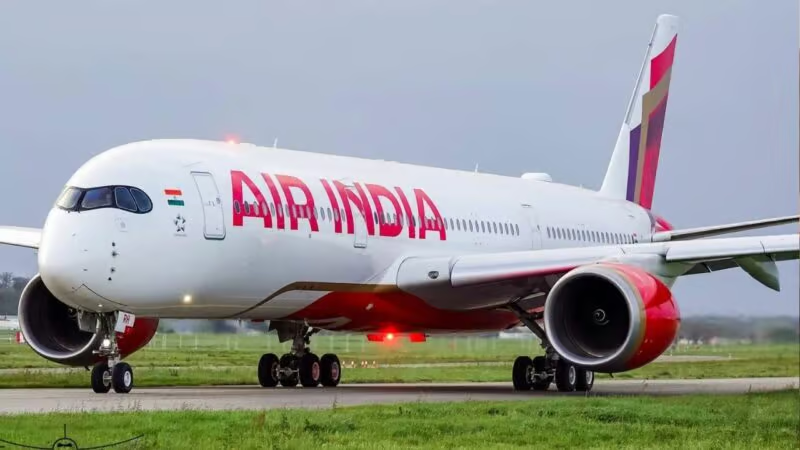
Among the hardest-hit carriers is Air India, which previously estimated that the airspace closure could cost the airline nearly $600 million annually if restrictions remain in place. The airline has sought government support to help offset the financial burden created by the prolonged rerouting of international services.
The situation has become even more challenging due to wider geopolitical tensions in the Middle East, with additional airspace restrictions over conflict zones disrupting established flight corridors. Airlines have been forced to cancel some services while rerouting others, further increasing operating expenses and reducing schedule reliability.
Industry analysts say the combined impact of Pakistan’s airspace restrictions and regional instability is reshaping flight operations for Indian carriers, creating one of the most significant challenges the sector has faced in recent years as it struggles to maintain profitability and network efficiency.
Leave a Reply