
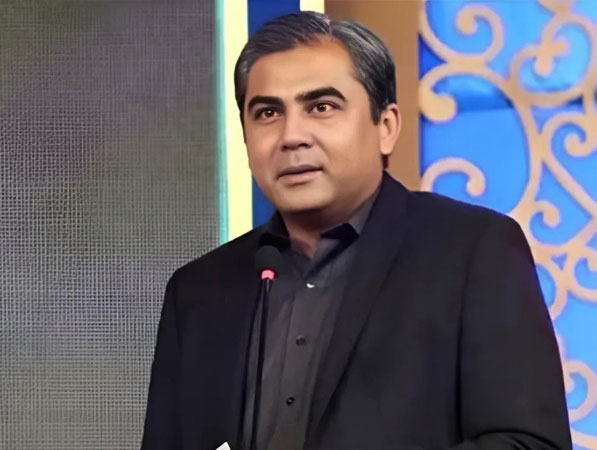
Federal Interior Minister Senator Mohsin Naqvi announced on August 17, 2025, that Pakistan possesses video footage of six Indian fighter jets shot down during the recent military confrontation with India in May 2025. Speaking at a seminar hosted by the Professor Waris Mir Foundation at Aiwan-e-Iqbal in Lahore, Naqvi highlighted the global media impact of Pakistan’s military and diplomatic successes.
Intelligence & Military Strategy Triumph
Naqvi praised Pakistan’s intelligence services for their pivotal role in the conflict, claiming they had full knowledge of India’s war plans in advance. “Whatever India planned, we learned about it in time,” he stated. He noted that Indian missile attacks failed to hit key Pakistani bases, including Nur Khan Airbase near Rawalpindi, which sustained no damage. Only one base suffered losses, with minimal casualties. Naqvi, who witnessed several events firsthand, defended the agencies against critics, saying, “Some people criticize our intelligence, but they performed exceptionally well during the war.”
The minister lauded Army Chief Field Marshal Syed Asim Munir for his resolute leadership. He recounted Munir’s metaphor shared with a Saudi delegation: “India is a shining Mercedes, but Pakistan is a fully loaded dumper truck. Imagine who suffers more in a collision.” Naqvi claimed Pakistan’s army, air force, and navy executed a historic joint strategy, contrasting with India’s disjointed command structure. He asserted that Pakistan could have inflicted greater damage but restrained itself, noting that India struggled to absorb its losses, including the six jets, three of which were French-made Rafales.
A ‘Pahalgam Drama’
Naqvi targeted Indian leaders Ajit Doval and Amit Shah, calling them the “masterminds” behind India’s escalation, likening their actions to a “Pahalgam drama.” He accused them of steering India toward ruin and exploiting the post-9/11 War on Terror to suppress Kashmiris. Naqvi claimed India falsely linked the April 2025 Pahalgam attack to Pakistan, triggering the conflict, which Pakistan denied. He vowed that Pakistan would continue exposing India’s alleged sponsorship of terrorism in Balochistan and Khyber Pakhtunkhwa.
Political Unity & Divine Help
During the conflict, Naqvi said, Pakistan’s political parties stood united, unlike India’s fractured leadership. He praised Prime Minister Shehbaz Sharif and PPP Chairman Bilawal Bhutto Zardari for outperforming India’s diplomatic efforts, particularly in countering India’s lobbying in the United States. Naqvi revealed that Pakistan faced intense international pressure not to escalate further after downing the jets but resisted, delivering a “fitting response” through Operation Bunyan-um-Marsoos, which targeted Indian military installations, including an oil depot.
Naqvi attributed Pakistan’s success to “divine help,” citing an incident where seven Indian missiles missed a critical Pakistani base. In contrast, Pakistan’s retaliatory strikes hit India’s largest oil storage depot without civilian casualties.
Leave a Reply